
Learn how ultra-low power e-paper technology works to open new display options for IoT applications
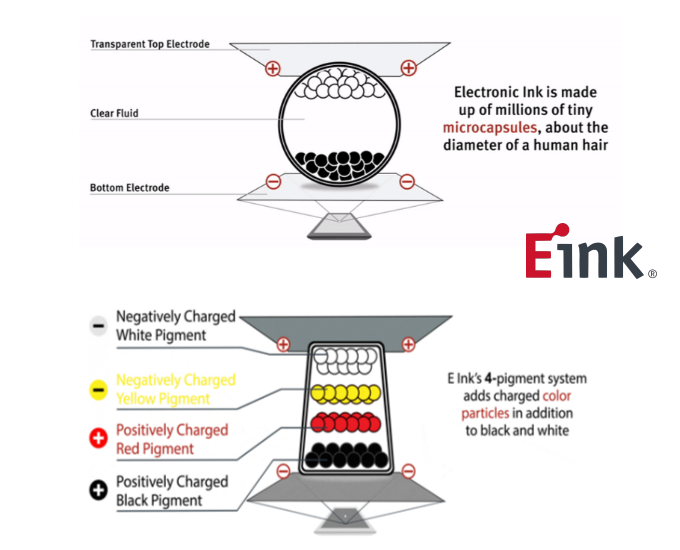
E-paper (also called ePaper) is an electronic display technology that mimics the appearance of paper. Using the same inks as the traditional printing industry, e-paper displays (EPDs) have tiny capsules (or cups) filled with charged ink particles.
When the proper charge is applied, an EPD creates highly detailed images with the contrast ratio and readability of printed material.
Made famous by the Amazon Kindle, e-paper is an electronic display technology which mimics the appearance of paper. As a bistable display technology, e-paper can be extremely low power, allowing it to be used in devices without the power budget of a traditional LCD display.
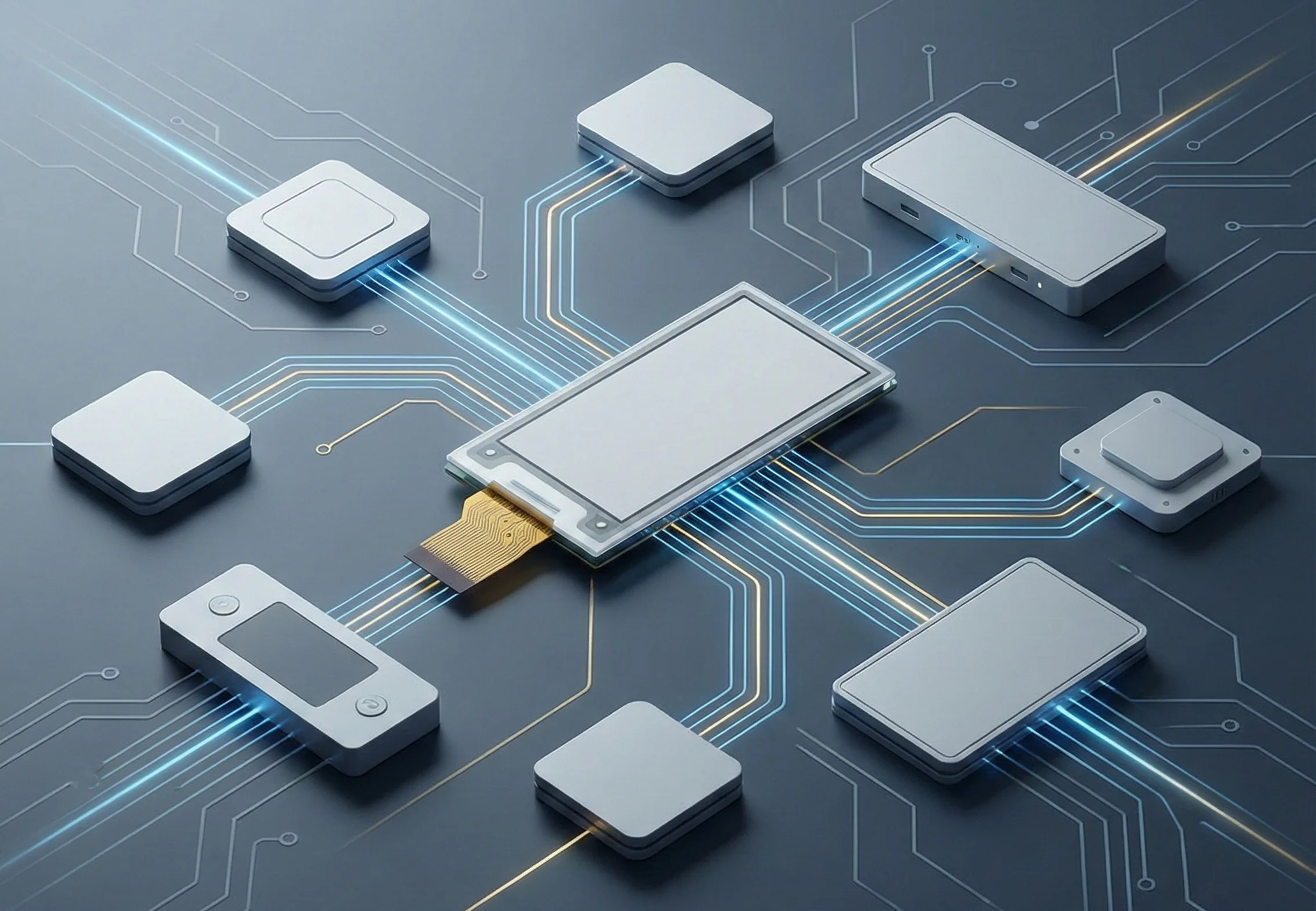
Once the text and images of an EPD have been rendered, no power is needed to maintain the display. In fact, e-paper is so low power that harvested energy can be used to make updates, enabling the use of RFID or NFC devices with batteryless EPDs. For more insight into how e-paper works, download our white paper.
You can add thin, light, highly-readable e-paper displays to extremely power-constrained devices to enhance many IoT applications including logistics, discrete manufacturing and retail.
Try these approaches today with our development kit, which contains an onboard driving circuit to help you easily develop EPD applications.
Wirelessly connected electronic shelf labels enable remote, centralised management and dynamic pricing strategies in retail environments.
E-paper provides at-a-glance visibility of RFID/NFC tag data for use in logistics and manufacturing applications.
EPDs can enhance the functionality of numerous battery-powered IoT devices, including utility meters, cold-chain temperature data loggers, and environmental sensors.
| Screen | Refresh | Sleep | Day | Year | |||
|---|---|---|---|---|---|---|---|
| Technology | Current | Duration | Energy | Energy | Energy | Current | Duration |
mA | s | mAh | mAh | mAs | mA | s | |
| EPD 2.66" BW Fast Refresh | 2.459 | 0.610 | 1.500 | 0.001 | 92 | 0.026 | 9.3 |
| TFT 2.4" with backlight | 9.470 | 0.100 | 0.947 | 9.477 | 818.813 | 227 | 83.019 |
EPD only consumes power when screen is refreshed. Contrary to TFT displays where backlighting is required and represents a major power consumer.
The whitepaper above will explain how we measure the power consumption of both displays.
The 2.4″ TFT would require 138 CR2450 coin-cell batteries, while the 2.66″ EPD would consume just 1.6% of the same battery over the same period.
How does an e-paper display work?
Why does e-paper use so little power?
Can e-paper displays be read in direct sunlight?
What is the refresh rate of an e-paper display?
How long does an e-paper display last on a battery?
What is the difference between e-paper and LCD?